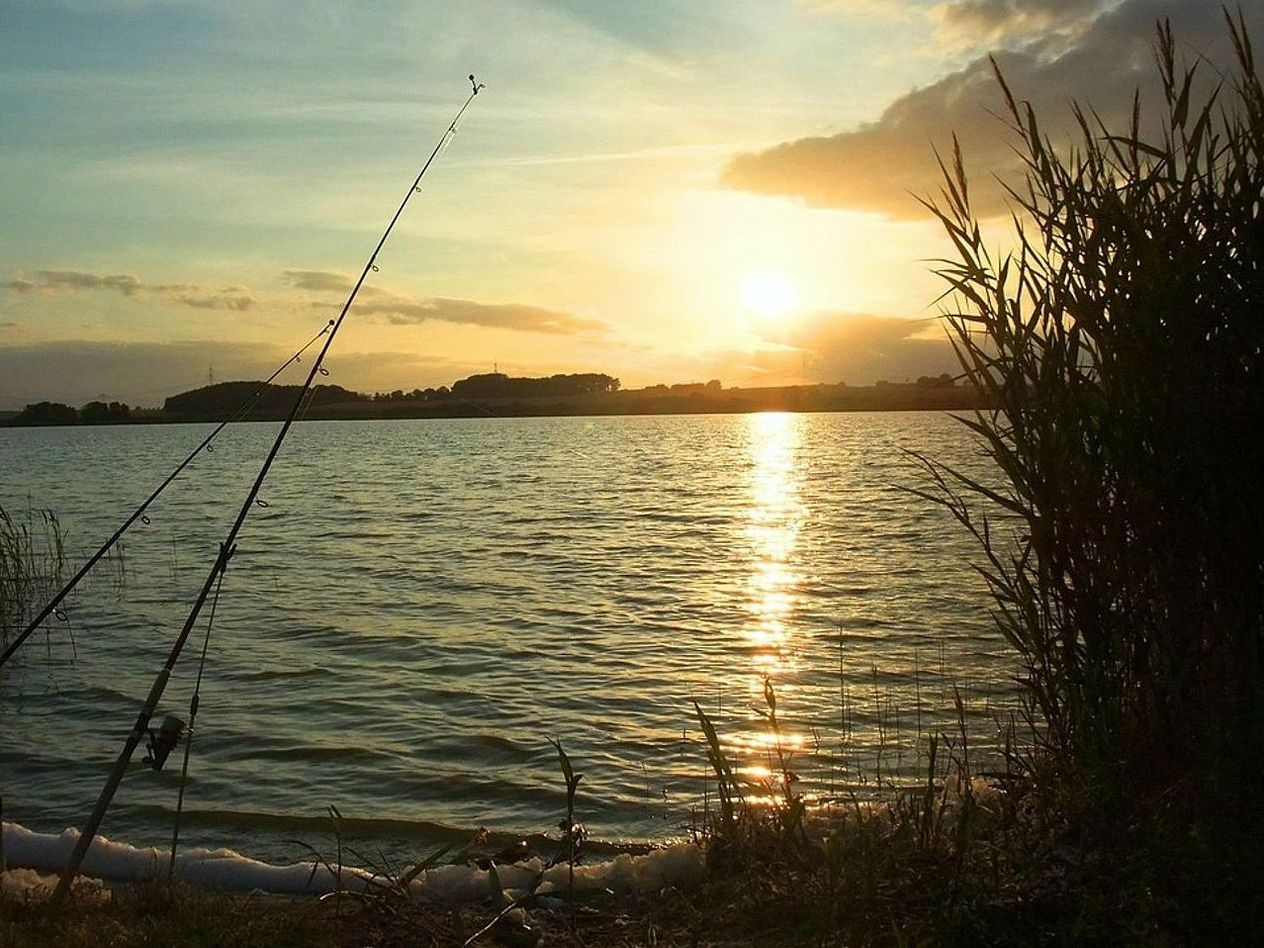
There is a stretch of morning that belongs almost entirely to anglers. It begins about an hour before the sun clears the horizon and ends the moment light hits the water. Anyone who has fished it will tell you the same thing: it is not the view you go back for — it is what rises.
The water comes alive in darkness
The first surprise is how much there is to hear. With no light to read by, your ears become everything — the current working below you, a shift in the wind as the channel opens, the small deliberate sound of a fish breaking the surface a few casts away. Guides who normally cover water quickly find themselves pausing to listen, waiting for the next rise.
None of this is mystical. Sound carries further through cold, still air, and there is far less competing with it. Knowing why does not make it any less thrilling the first time you hear a feeding fish in near-total darkness.
The second surprise is how well you learn to cast. Given twenty minutes without forcing light, most anglers can work a reasonable stretch by feeling the current and reading the water's texture. The trick is to trust your instincts rather than your eyes: your hands know where the fly is going better than your sight ever could, and the takes come clearest when you stop overthinking it.
There is a limit, and it is worth being honest about it. Under heavy cloud with no moon the river becomes genuinely dangerous, and the sensible thing is to wait for first light or move to water you know completely. Nobody catches their best fish by wading blind.
What the early morning demands
An earlier night than you think you need, which is the part almost nobody manages. One more layer than seems necessary, because the coldest point of the whole day arrives shortly before sunrise rather than in the middle of the night. And a river section you already know well, since this is not the hour to discover that a crossing is too deep or the current too strong.
Also: tell someone where you have gone and when you will be back. This single habit is what separates anglers who fish early water for years from those who do it twice. It costs nothing and it removes the only genuinely bad outcome from the morning.
Beyond that it asks for very little. A headlamp you keep off unless absolutely necessary, something warm to drink, and enough time that you are not watching the clock. The point is to arrive early and wait for the rises to begin.
You do not go out to see the sunrise. You go out to be there when the fish decide to feed.
Then the light arrives
It does not happen all at once, and the best rises do not wait for full daylight. Long before the sun clears the hills, the water starts to separate from itself — a current line, then the shape of a pool, then the fact that the surface has texture and the texture is telling you where to cast. Distance comes back before detail does, but by then you are already into fish.
There is a short window, maybe four or five minutes, when the low sun rakes across the water sideways and every ripple and feeding ring stands up in sharp relief. Then it lifts, the shadows shorten, and the water goes back to looking like itself — still good, but the magic hour has passed.
The temptation now is to reach for a camera, and there is nothing wrong with that, though most anglers report the same result. The photographs are fine, and they are not the thing. What a photograph cannot hold is the thirty minutes of cold water and missed rises that came before the perfect cast.
Going back out
The mornings that produce nothing are useful too. Flat grey water, wind that makes it impossible to cast accurately, an hour of fishing for nothing you could describe to anyone afterwards — these are what make the exceptional mornings worth remembering. Without them the whole thing collapses into luck.
Fish often enough and the mornings stop being interchangeable. You start to read the conditions from the feel of the air on the way down to the water, and you are wrong often enough to keep coming back. The honest reason has little to do with catching fish: for one hour the world pauses, nothing can reach you, and you are exactly where you chose to be.
James T. fishes dawn and dusk more often than is reasonable, and has guided river trips since the first season.